If Africa Fixes Housing, It Fixes Everything: The Trillion-Dollar Opportunity We Are Sitting On
By John Oamen, CEO — Cutstruct
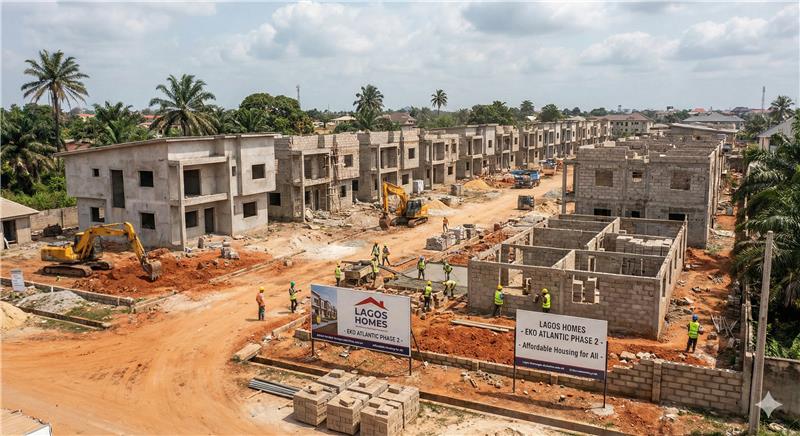
We often talk about Africa’s potential — its youthful population, its entrepreneurial spirit, its growing cities — but we rarely trace all of that potential back to what every thriving economy truly needs first and foremost: homes.
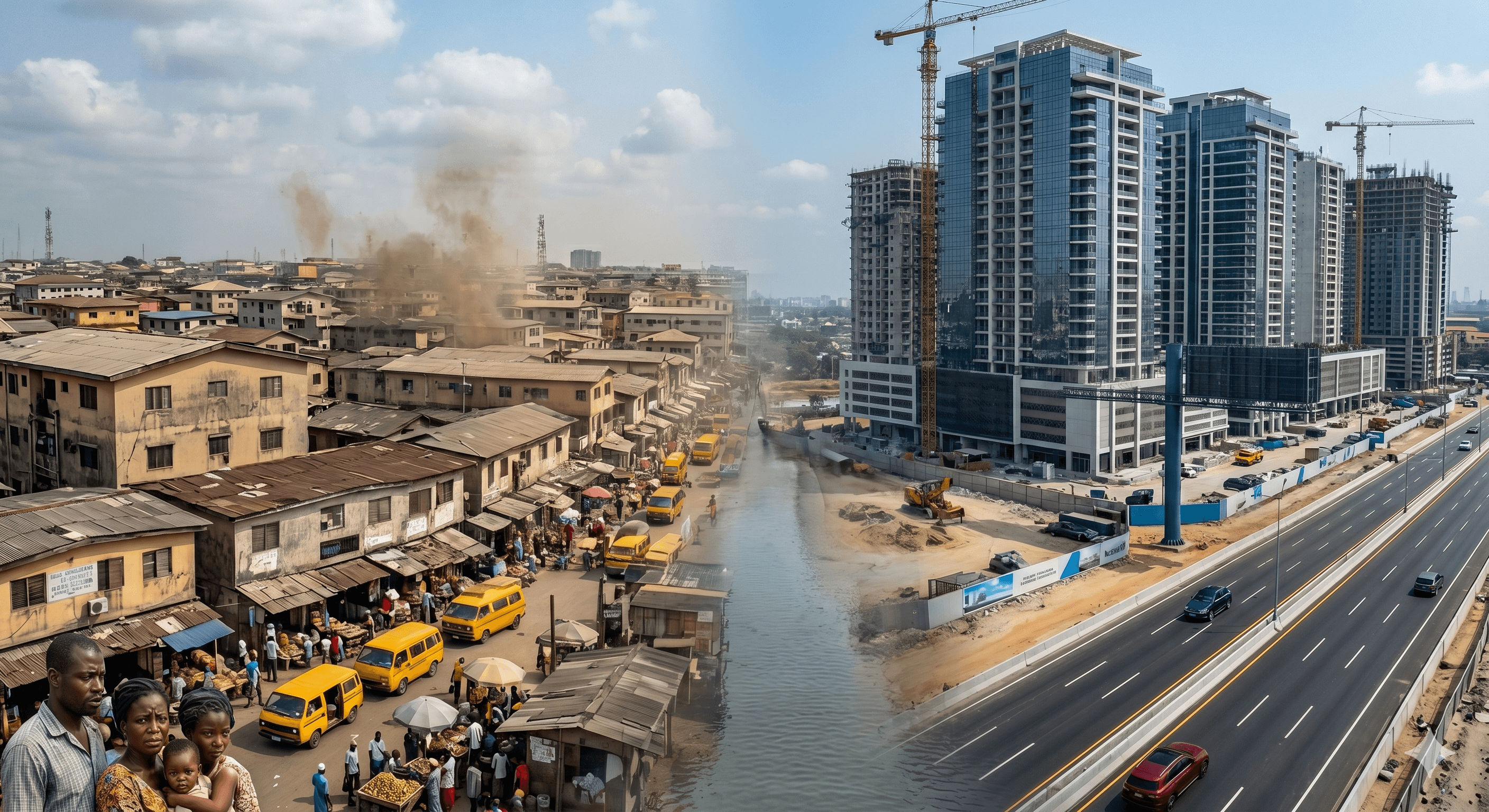
Across the continent, an estimated 50 million housing units are missing today. If we do not accelerate our response, that deficit could balloon to 130 million units by 2030, representing a staggering US $1.4 trillion financing gap.
Those figures are more than just statistics — they are a mirror for our economic future.
Housing is Jobs
Affordable, dignified housing isn’t just about shelter — it’s about economic participation. Beyond the immediate need for construction workers, planners, and architects, housing investment can ripple through entire economies.
According to global analyses, every new housing unit built generates jobs across supply chains, from building materials and logistics to services and professional sectors. And when millions of jobs emerge in formal employment, the informal economy — which today still dominates employment opportunities — has a real path toward stability and skill development.
Housing is GDP Growth
Urbanisation isn’t slowing down — and that’s a good thing when harnessed well. Millions of Africans are moving into cities every year, seeking opportunity, education, and economic inclusion. Research shows that urbanisation has been responsible for roughly 30 % of Africa’s per capita GDP growth in recent decades, helping fuel higher wages and productivity.
Yet without adequate housing, cities become constrained. They lose their competitive edge when workers are forced into informal settlements with inadequate access to services. Affordable housing should therefore be at the heart of national industrial strategies — not a peripheral cost centre but a growth driver.
Housing is Urban Stability
Imagine cities where workers live near jobs, not hours from them; where families have access to basic services; and where neighbourhoods are connected to transport, schools, and healthcare.
Right now, tens of millions live in conditions that undermine all of that. Cities under strain can amplify social tension, weaken public health outcomes, and trap talent in cycles of perilous living standards. Expanding housing isn’t just a real estate play — it is fundamental to urban cohesion and resilience.
Housing Builds Family Wealth
Ownership matters. For generations, owning a home has been one of the most reliable ways for families to build wealth. In many advanced economies, real estate is the backbone of household balance sheets. In Africa, that opportunity remains largely untapped.
Affordable housing finance is nascent in most markets. Mortgage markets barely scratch the surface, often less than 1 % of GDP, compared to 60 % or more in mature markets. Expanding access to housing credits and creating innovative financing models can put wealth creation firmly within reach for millions more families.
Housing is National Growth — If We Make It a Priority
When governments and private players treat housing as a sector of strategic importance, the results multiply. Nigeria’s real estate and construction sectors now contribute a significant share of GDP, reflecting just how economically central housing activities have become for national output.
But the story doesn’t end at GDP figures. Responsible housing investment delivers healthier cities, greater consumer demand, expanded infrastructure development, and more stable labour markets. It is the connective tissue between societal needs and economic opportunity.
The Trillion-Dollar Opportunity
Yes, the numbers are large. Yes, the challenges are systemic. But a $1.4 trillion housing investment gap is also a $1.4 trillion opportunity to create jobs, build GDP, and strengthen communities.
Africa’s housing challenge is not a burden — it is the key to unlocking a future where economic growth works for everyone.
This perspective requires a shift: from seeing housing as shelter to seeing it as a strategy. From treating it as a cost to framing it as a cornerstone of national progress. When we address housing at scale, we are also tackling unemployment, poverty, urban inequality, and stalled growth.
A Hopeful Road Ahead
We are not powerless in the face of these numbers. Governments, financiers, developers, and innovators are beginning to converge on solutions that work across markets — from public-private partnerships to new financing instruments and scalable construction technologies. What we need now is collective urgency and creative collaboration.
Imagine cities where workers live close to where they build and innovate; where families are no longer priced out of dignity; where housing finance lets dreams take physical form. That future isn’t distant — it’s within our reach if we choose to build it now.
To every leader reading this — the conversation about Africa’s future must include housing as a central pillar. And to those ready to partner, invest, or innovate — this is your moment to shape the horizon.
Because when Africa fixes housing, she doesn’t just fix shelter — she fixes jobs, prosperity, and the promise of a thriving continent.
More to Discover
If Africa Fixes Housing, It Fixes Everything: The Trillion-Dollar Opportunity We Are Sitting On
By John Oamen, CEO — Cutstruct
We often talk about Africa’s potential — its youthful population, its entrepreneurial spirit, its growing cities — but we rarely trace all of that potential back to what every thriving economy truly needs first and foremost: homes.
Across the continent, an estimated 50 million housing units are missing today. If we do not accelerate our response, that deficit could balloon to 130 million units by 2030, representing a staggering US $1.4 trillion financing gap.
Those figures are more than just statistics — they are a mirror for our economic future.
Housing is Jobs
Affordable, dignified housing isn’t just about shelter — it’s about economic participation. Beyond the immediate need for construction workers, planners, and architects, housing investment can ripple through entire economies.
According to global analyses, every new housing unit built generates jobs across supply chains, from building materials and logistics to services and professional sectors. And when millions of jobs emerge in formal employment, the informal economy — which today still dominates employment opportunities — has a real path toward stability and skill development.
Housing is GDP Growth
Urbanisation isn’t slowing down — and that’s a good thing when harnessed well. Millions of Africans are moving into cities every year, seeking opportunity, education, and economic inclusion. Research shows that urbanisation has been responsible for roughly 30 % of Africa’s per capita GDP growth in recent decades, helping fuel higher wages and productivity.
Yet without adequate housing, cities become constrained. They lose their competitive edge when workers are forced into informal settlements with inadequate access to services. Affordable housing should therefore be at the heart of national industrial strategies — not a peripheral cost centre but a growth driver.
Housing is Urban Stability
Imagine cities where workers live near jobs, not hours from them; where families have access to basic services; and where neighbourhoods are connected to transport, schools, and healthcare.
Right now, tens of millions live in conditions that undermine all of that. Cities under strain can amplify social tension, weaken public health outcomes, and trap talent in cycles of perilous living standards. Expanding housing isn’t just a real estate play — it is fundamental to urban cohesion and resilience.
Housing Builds Family Wealth
Ownership matters. For generations, owning a home has been one of the most reliable ways for families to build wealth. In many advanced economies, real estate is the backbone of household balance sheets. In Africa, that opportunity remains largely untapped.
Affordable housing finance is nascent in most markets. Mortgage markets barely scratch the surface, often less than 1 % of GDP, compared to 60 % or more in mature markets. Expanding access to housing credits and creating innovative financing models can put wealth creation firmly within reach for millions more families.
Housing is National Growth — If We Make It a Priority
When governments and private players treat housing as a sector of strategic importance, the results multiply. Nigeria’s real estate and construction sectors now contribute a significant share of GDP, reflecting just how economically central housing activities have become for national output.
But the story doesn’t end at GDP figures. Responsible housing investment delivers healthier cities, greater consumer demand, expanded infrastructure development, and more stable labour markets. It is the connective tissue between societal needs and economic opportunity.
The Trillion-Dollar Opportunity
Yes, the numbers are large. Yes, the challenges are systemic. But a $1.4 trillion housing investment gap is also a $1.4 trillion opportunity to create jobs, build GDP, and strengthen communities.
Africa’s housing challenge is not a burden — it is the key to unlocking a future where economic growth works for everyone.
This perspective requires a shift: from seeing housing as shelter to seeing it as a strategy. From treating it as a cost to framing it as a cornerstone of national progress. When we address housing at scale, we are also tackling unemployment, poverty, urban inequality, and stalled growth.
A Hopeful Road Ahead
We are not powerless in the face of these numbers. Governments, financiers, developers, and innovators are beginning to converge on solutions that work across markets — from public-private partnerships to new financing instruments and scalable construction technologies. What we need now is collective urgency and creative collaboration.
Imagine cities where workers live close to where they build and innovate; where families are no longer priced out of dignity; where housing finance lets dreams take physical form. That future isn’t distant — it’s within our reach if we choose to build it now.
To every leader reading this — the conversation about Africa’s future must include housing as a central pillar. And to those ready to partner, invest, or innovate — this is your moment to shape the horizon.
Because when Africa fixes housing, she doesn’t just fix shelter — she fixes jobs, prosperity, and the promise of a thriving continent.
More to Discover
If Africa Fixes Housing, It Fixes Everything: The Trillion-Dollar Opportunity We Are Sitting On
By John Oamen, CEO — Cutstruct
We often talk about Africa’s potential — its youthful population, its entrepreneurial spirit, its growing cities — but we rarely trace all of that potential back to what every thriving economy truly needs first and foremost: homes.
Across the continent, an estimated 50 million housing units are missing today. If we do not accelerate our response, that deficit could balloon to 130 million units by 2030, representing a staggering US $1.4 trillion financing gap.
Those figures are more than just statistics — they are a mirror for our economic future.
Housing is Jobs
Affordable, dignified housing isn’t just about shelter — it’s about economic participation. Beyond the immediate need for construction workers, planners, and architects, housing investment can ripple through entire economies.
According to global analyses, every new housing unit built generates jobs across supply chains, from building materials and logistics to services and professional sectors. And when millions of jobs emerge in formal employment, the informal economy — which today still dominates employment opportunities — has a real path toward stability and skill development.
Housing is GDP Growth
Urbanisation isn’t slowing down — and that’s a good thing when harnessed well. Millions of Africans are moving into cities every year, seeking opportunity, education, and economic inclusion. Research shows that urbanisation has been responsible for roughly 30 % of Africa’s per capita GDP growth in recent decades, helping fuel higher wages and productivity.
Yet without adequate housing, cities become constrained. They lose their competitive edge when workers are forced into informal settlements with inadequate access to services. Affordable housing should therefore be at the heart of national industrial strategies — not a peripheral cost centre but a growth driver.
Housing is Urban Stability
Imagine cities where workers live near jobs, not hours from them; where families have access to basic services; and where neighbourhoods are connected to transport, schools, and healthcare.
Right now, tens of millions live in conditions that undermine all of that. Cities under strain can amplify social tension, weaken public health outcomes, and trap talent in cycles of perilous living standards. Expanding housing isn’t just a real estate play — it is fundamental to urban cohesion and resilience.
Housing Builds Family Wealth
Ownership matters. For generations, owning a home has been one of the most reliable ways for families to build wealth. In many advanced economies, real estate is the backbone of household balance sheets. In Africa, that opportunity remains largely untapped.
Affordable housing finance is nascent in most markets. Mortgage markets barely scratch the surface, often less than 1 % of GDP, compared to 60 % or more in mature markets. Expanding access to housing credits and creating innovative financing models can put wealth creation firmly within reach for millions more families.
Housing is National Growth — If We Make It a Priority
When governments and private players treat housing as a sector of strategic importance, the results multiply. Nigeria’s real estate and construction sectors now contribute a significant share of GDP, reflecting just how economically central housing activities have become for national output.
But the story doesn’t end at GDP figures. Responsible housing investment delivers healthier cities, greater consumer demand, expanded infrastructure development, and more stable labour markets. It is the connective tissue between societal needs and economic opportunity.
The Trillion-Dollar Opportunity
Yes, the numbers are large. Yes, the challenges are systemic. But a $1.4 trillion housing investment gap is also a $1.4 trillion opportunity to create jobs, build GDP, and strengthen communities.
Africa’s housing challenge is not a burden — it is the key to unlocking a future where economic growth works for everyone.
This perspective requires a shift: from seeing housing as shelter to seeing it as a strategy. From treating it as a cost to framing it as a cornerstone of national progress. When we address housing at scale, we are also tackling unemployment, poverty, urban inequality, and stalled growth.
A Hopeful Road Ahead
We are not powerless in the face of these numbers. Governments, financiers, developers, and innovators are beginning to converge on solutions that work across markets — from public-private partnerships to new financing instruments and scalable construction technologies. What we need now is collective urgency and creative collaboration.
Imagine cities where workers live close to where they build and innovate; where families are no longer priced out of dignity; where housing finance lets dreams take physical form. That future isn’t distant — it’s within our reach if we choose to build it now.
To every leader reading this — the conversation about Africa’s future must include housing as a central pillar. And to those ready to partner, invest, or innovate — this is your moment to shape the horizon.
Because when Africa fixes housing, she doesn’t just fix shelter — she fixes jobs, prosperity, and the promise of a thriving continent.