When Capital Finally Flows: What Actually Happens When Housing Becomes Investable
By John Oamen, Cutstruct CEO

Capital thrives where systems are predictable. Investors are comfortable deploying capital into sectors where costs can be estimated, timelines can be forecasted, and risks can be quantified.
For many years, construction simply did not offer that level of clarity.
But technology and financial innovation are beginning to introduce something the sector has long needed: transparency and coordination.
Platforms like Cutstruct are rethinking how one of the most complex aspects of construction works: the procurement and supply chain for building materials. By digitizing procurement, standardizing material costs across fragmented markets, and providing real-time visibility into project milestones, technology is turning housing into a truly investable, predictable asset class.
When supply chains become structured, the ripple effect extends far beyond procurement. Projects become easier to plan, costs become easier to forecast, and execution becomes easier to monitor.
Capital does not avoid housing; capital avoids uncertainty. Capital is inherently risk-averse; it retreats from opacity but flows toward transparency
What Changes for Developers
Independent developers have suffered from a lack of liquidity, forcing them to procure materials piecemeal as cash trickles in.
This "hand-to-mouth" building process is the primary driver of stalled projects, compromised quality, and massive cost overruns. When capital flows freely, the entire operational model changes:
● Predictable Supply Chains: Developers can secure materials in bulk upfront, locking in prices and shielding their margins from macroeconomic inflationary spikes.
● Uninterrupted Timelines: With funding secured and materials already staged on-site, project cycles shrink dramatically. A traditional 36-month build can condense to 18 months simply because the friction of waiting for cash is completely removed.
● Scale and Ambition: Builders transition from struggling to finish single, isolated developments to confidently launching multi-phase, city-defining projects.
De-Risked Returns for Investors
Institutional investors, pension funds, and private equity have always desired the robust yields associated with real estate, but they couldn't stomach the localized execution risk. When capital flows freely through a tech-enabled ecosystem, that risk is fundamentally altered:
Data-Backed Transparency: Technology ensures that every dollar deployed is tracked, tied to a specific, verified project milestone, and accounted for in real-time. The black box of construction finance is finally opened.
De-Risked Portfolios: By removing the operational blind spots and standardizing the procurement layer, the risk profile of construction financing drops significantly, aligning it with other mature, predictable asset classes.
Reliable Returns: Faster project completion means faster capital recycling, quicker exits, and more reliable, compounding yields for limited partners.
The Economic Multiplier
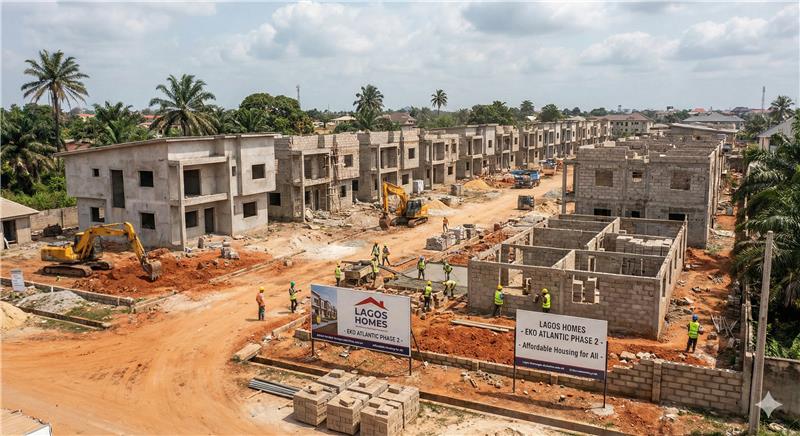
Perhaps the most powerful outcome of efficient capital flow into housing is what happens beyond the construction site. Housing is not just a real estate activity. It is an economic engine.
When housing development accelerates, it activates an entire network of industries. Construction firms expand, manufacturing demand for building materials rises, logistics networks grow to support increased supply movement, and skilled labor markets deepen.
Every housing project creates a chain reaction of economic activity: New roads are built to connect communities. Utilities expand to support growing neighborhoods. Local businesses emerge to serve residents, and financial institutions develop new products to support homebuyers and developers alike.
In many ways, housing acts as the foundation upon which broader urban growth is built. When capital begins to flow freely into housing, the benefits ripple across the economy.
Jobs are created, infrastructure improves, and cities become functional and more productive.
Housing doesn’t just solve a social need; it accelerates economic development.
Solving Housing Deficits at Scale
Discussions around housing deficits have focused on the magnitude of the problem. Governments, developers, and policymakers often speak about shortages in terms that make them feel nearly impossible to solve.
However, the truth is simpler. Housing shortages persist largely because the sector has lacked efficient capital flow.
When financing is difficult to secure, projects slow down. When supply chains are inefficient, developers cannot scale. When investors lack visibility, capital remains cautious.
Once those barriers begin to fall, the equation changes. Developers can build more units simultaneously. Investors can fund multiple projects across different locations. Procurement systems allow projects to move quickly from groundbreaking to completion.
Instead of housing being delivered one project at a time, the industry begins to operate at a portfolio scale.
Housing as an Asset Class
What we are witnessing today is the early stage of a structural shift in how housing is built, financed, and delivered.
The future of the sector will not be defined only by architectural innovation or urban planning. It will be defined by the systems that make housing predictable enough for capital to trust.
Systems that organize procurement, systems that provide visibility into construction, and systems that allow investors to deploy capital confidently.
When those systems exist, housing evolves from a difficult operational sector into a powerful financial and economic platform.
This is the transformation companies like Cutstruct are working toward.
Not just making construction easier, but making housing investable.
The opportunity ahead is enormous, but realizing it requires collaboration across the entire ecosystem.
Developers must embrace tools that bring transparency and efficiency to the construction process. Investors must recognize that housing is rapidly evolving into a structured investment category. Policymakers should support the infrastructure and regulatory frameworks that allow capital to flow with confidence.
More to Discover

When Capital Finally Flows: What Actually Happens When Housing Becomes Investable
By John Oamen, Cutstruct CEO
Capital thrives where systems are predictable. Investors are comfortable deploying capital into sectors where costs can be estimated, timelines can be forecasted, and risks can be quantified.
For many years, construction simply did not offer that level of clarity.
But technology and financial innovation are beginning to introduce something the sector has long needed: transparency and coordination.
Platforms like Cutstruct are rethinking how one of the most complex aspects of construction works: the procurement and supply chain for building materials. By digitizing procurement, standardizing material costs across fragmented markets, and providing real-time visibility into project milestones, technology is turning housing into a truly investable, predictable asset class.
When supply chains become structured, the ripple effect extends far beyond procurement. Projects become easier to plan, costs become easier to forecast, and execution becomes easier to monitor.
Capital does not avoid housing; capital avoids uncertainty. Capital is inherently risk-averse; it retreats from opacity but flows toward transparency
What Changes for Developers
Independent developers have suffered from a lack of liquidity, forcing them to procure materials piecemeal as cash trickles in.
This "hand-to-mouth" building process is the primary driver of stalled projects, compromised quality, and massive cost overruns. When capital flows freely, the entire operational model changes:
● Predictable Supply Chains: Developers can secure materials in bulk upfront, locking in prices and shielding their margins from macroeconomic inflationary spikes.
● Uninterrupted Timelines: With funding secured and materials already staged on-site, project cycles shrink dramatically. A traditional 36-month build can condense to 18 months simply because the friction of waiting for cash is completely removed.
● Scale and Ambition: Builders transition from struggling to finish single, isolated developments to confidently launching multi-phase, city-defining projects.
De-Risked Returns for Investors
Institutional investors, pension funds, and private equity have always desired the robust yields associated with real estate, but they couldn't stomach the localized execution risk. When capital flows freely through a tech-enabled ecosystem, that risk is fundamentally altered:
Data-Backed Transparency: Technology ensures that every dollar deployed is tracked, tied to a specific, verified project milestone, and accounted for in real-time. The black box of construction finance is finally opened.
De-Risked Portfolios: By removing the operational blind spots and standardizing the procurement layer, the risk profile of construction financing drops significantly, aligning it with other mature, predictable asset classes.
Reliable Returns: Faster project completion means faster capital recycling, quicker exits, and more reliable, compounding yields for limited partners.
The Economic Multiplier
Perhaps the most powerful outcome of efficient capital flow into housing is what happens beyond the construction site. Housing is not just a real estate activity. It is an economic engine.
When housing development accelerates, it activates an entire network of industries. Construction firms expand, manufacturing demand for building materials rises, logistics networks grow to support increased supply movement, and skilled labor markets deepen.
Every housing project creates a chain reaction of economic activity: New roads are built to connect communities. Utilities expand to support growing neighborhoods. Local businesses emerge to serve residents, and financial institutions develop new products to support homebuyers and developers alike.
In many ways, housing acts as the foundation upon which broader urban growth is built. When capital begins to flow freely into housing, the benefits ripple across the economy.
Jobs are created, infrastructure improves, and cities become functional and more productive.
Housing doesn’t just solve a social need; it accelerates economic development.
Solving Housing Deficits at Scale
Discussions around housing deficits have focused on the magnitude of the problem. Governments, developers, and policymakers often speak about shortages in terms that make them feel nearly impossible to solve.
However, the truth is simpler. Housing shortages persist largely because the sector has lacked efficient capital flow.
When financing is difficult to secure, projects slow down. When supply chains are inefficient, developers cannot scale. When investors lack visibility, capital remains cautious.
Once those barriers begin to fall, the equation changes. Developers can build more units simultaneously. Investors can fund multiple projects across different locations. Procurement systems allow projects to move quickly from groundbreaking to completion.
Instead of housing being delivered one project at a time, the industry begins to operate at a portfolio scale.
Housing as an Asset Class
What we are witnessing today is the early stage of a structural shift in how housing is built, financed, and delivered.
The future of the sector will not be defined only by architectural innovation or urban planning. It will be defined by the systems that make housing predictable enough for capital to trust.
Systems that organize procurement, systems that provide visibility into construction, and systems that allow investors to deploy capital confidently.
When those systems exist, housing evolves from a difficult operational sector into a powerful financial and economic platform.
This is the transformation companies like Cutstruct are working toward.
Not just making construction easier, but making housing investable.
The opportunity ahead is enormous, but realizing it requires collaboration across the entire ecosystem.
Developers must embrace tools that bring transparency and efficiency to the construction process. Investors must recognize that housing is rapidly evolving into a structured investment category. Policymakers should support the infrastructure and regulatory frameworks that allow capital to flow with confidence.
More to Discover
When Capital Finally Flows: What Actually Happens When Housing Becomes Investable
By John Oamen, Cutstruct CEO
Capital thrives where systems are predictable. Investors are comfortable deploying capital into sectors where costs can be estimated, timelines can be forecasted, and risks can be quantified.
For many years, construction simply did not offer that level of clarity.
But technology and financial innovation are beginning to introduce something the sector has long needed: transparency and coordination.
Platforms like Cutstruct are rethinking how one of the most complex aspects of construction works: the procurement and supply chain for building materials. By digitizing procurement, standardizing material costs across fragmented markets, and providing real-time visibility into project milestones, technology is turning housing into a truly investable, predictable asset class.
When supply chains become structured, the ripple effect extends far beyond procurement. Projects become easier to plan, costs become easier to forecast, and execution becomes easier to monitor.
Capital does not avoid housing; capital avoids uncertainty. Capital is inherently risk-averse; it retreats from opacity but flows toward transparency
What Changes for Developers
Independent developers have suffered from a lack of liquidity, forcing them to procure materials piecemeal as cash trickles in.
This "hand-to-mouth" building process is the primary driver of stalled projects, compromised quality, and massive cost overruns. When capital flows freely, the entire operational model changes:
● Predictable Supply Chains: Developers can secure materials in bulk upfront, locking in prices and shielding their margins from macroeconomic inflationary spikes.
● Uninterrupted Timelines: With funding secured and materials already staged on-site, project cycles shrink dramatically. A traditional 36-month build can condense to 18 months simply because the friction of waiting for cash is completely removed.
● Scale and Ambition: Builders transition from struggling to finish single, isolated developments to confidently launching multi-phase, city-defining projects.
De-Risked Returns for Investors
Institutional investors, pension funds, and private equity have always desired the robust yields associated with real estate, but they couldn't stomach the localized execution risk. When capital flows freely through a tech-enabled ecosystem, that risk is fundamentally altered:
Data-Backed Transparency: Technology ensures that every dollar deployed is tracked, tied to a specific, verified project milestone, and accounted for in real-time. The black box of construction finance is finally opened.
De-Risked Portfolios: By removing the operational blind spots and standardizing the procurement layer, the risk profile of construction financing drops significantly, aligning it with other mature, predictable asset classes.
Reliable Returns: Faster project completion means faster capital recycling, quicker exits, and more reliable, compounding yields for limited partners.
The Economic Multiplier
Perhaps the most powerful outcome of efficient capital flow into housing is what happens beyond the construction site. Housing is not just a real estate activity. It is an economic engine.
When housing development accelerates, it activates an entire network of industries. Construction firms expand, manufacturing demand for building materials rises, logistics networks grow to support increased supply movement, and skilled labor markets deepen.
Every housing project creates a chain reaction of economic activity: New roads are built to connect communities. Utilities expand to support growing neighborhoods. Local businesses emerge to serve residents, and financial institutions develop new products to support homebuyers and developers alike.
In many ways, housing acts as the foundation upon which broader urban growth is built. When capital begins to flow freely into housing, the benefits ripple across the economy.
Jobs are created, infrastructure improves, and cities become functional and more productive.
Housing doesn’t just solve a social need; it accelerates economic development.
Solving Housing Deficits at Scale
Discussions around housing deficits have focused on the magnitude of the problem. Governments, developers, and policymakers often speak about shortages in terms that make them feel nearly impossible to solve.
However, the truth is simpler. Housing shortages persist largely because the sector has lacked efficient capital flow.
When financing is difficult to secure, projects slow down. When supply chains are inefficient, developers cannot scale. When investors lack visibility, capital remains cautious.
Once those barriers begin to fall, the equation changes. Developers can build more units simultaneously. Investors can fund multiple projects across different locations. Procurement systems allow projects to move quickly from groundbreaking to completion.
Instead of housing being delivered one project at a time, the industry begins to operate at a portfolio scale.
Housing as an Asset Class
What we are witnessing today is the early stage of a structural shift in how housing is built, financed, and delivered.
The future of the sector will not be defined only by architectural innovation or urban planning. It will be defined by the systems that make housing predictable enough for capital to trust.
Systems that organize procurement, systems that provide visibility into construction, and systems that allow investors to deploy capital confidently.
When those systems exist, housing evolves from a difficult operational sector into a powerful financial and economic platform.
This is the transformation companies like Cutstruct are working toward.
Not just making construction easier, but making housing investable.
The opportunity ahead is enormous, but realizing it requires collaboration across the entire ecosystem.
Developers must embrace tools that bring transparency and efficiency to the construction process. Investors must recognize that housing is rapidly evolving into a structured investment category. Policymakers should support the infrastructure and regulatory frameworks that allow capital to flow with confidence.